What Experts Miss

Working with experts in international affairs for many years has truly been a privilege.
I’ve been able to listen in on countless conversations, bursting with detailed knowledge and illuminating the culture, society, history and politics of places all around the world. I’ve been able to ask questions and get intelligent answers based on the experience of people who have been studying and analysing these countries and political systems for years.
I’ve also been able to see when they get things wrong, sometimes almost comically so.
There’s a pattern to it. Let me take a few examples…
I remember watching televised protests outside the Georgian parliament in November 2003. It was a Saturday, and a few of us were in the office catching up on work. A well-respected expert who knew a lot about Georgia was watching with me and said something to the effect of, “Well, this pointless protest isn’t going to turn into anything. I’m going home.”
They hardly got their coat on and reached the door, when the live TV images turned to protesters breaking into the parliament. They were clearly overthrowing the rule of President Eduard Shevardnadze, and it became known as Georgia’s “Rose Revolution”.
I called down the hall for the expert to come back. They were completely surprised by events.
Another time, during the “Arab Spring”, when people were challenging regimes across the Middle East, I asked some experts what would happen. It was early February 2011. Tunisia’s long-term dictator, President Zine El Abidine Ben Ali, had already fled in the face of protesters a couple weeks before.
A deeply respected Middle East expert – someone with decades of experience, inside government and out – told me, “There’s no way that’s going to happen in Egypt. [Dictator President Hosni] Mubarak has got the placed locked down too tight for that.”
Protests continued, and just a few days later, Mubarak resigned.
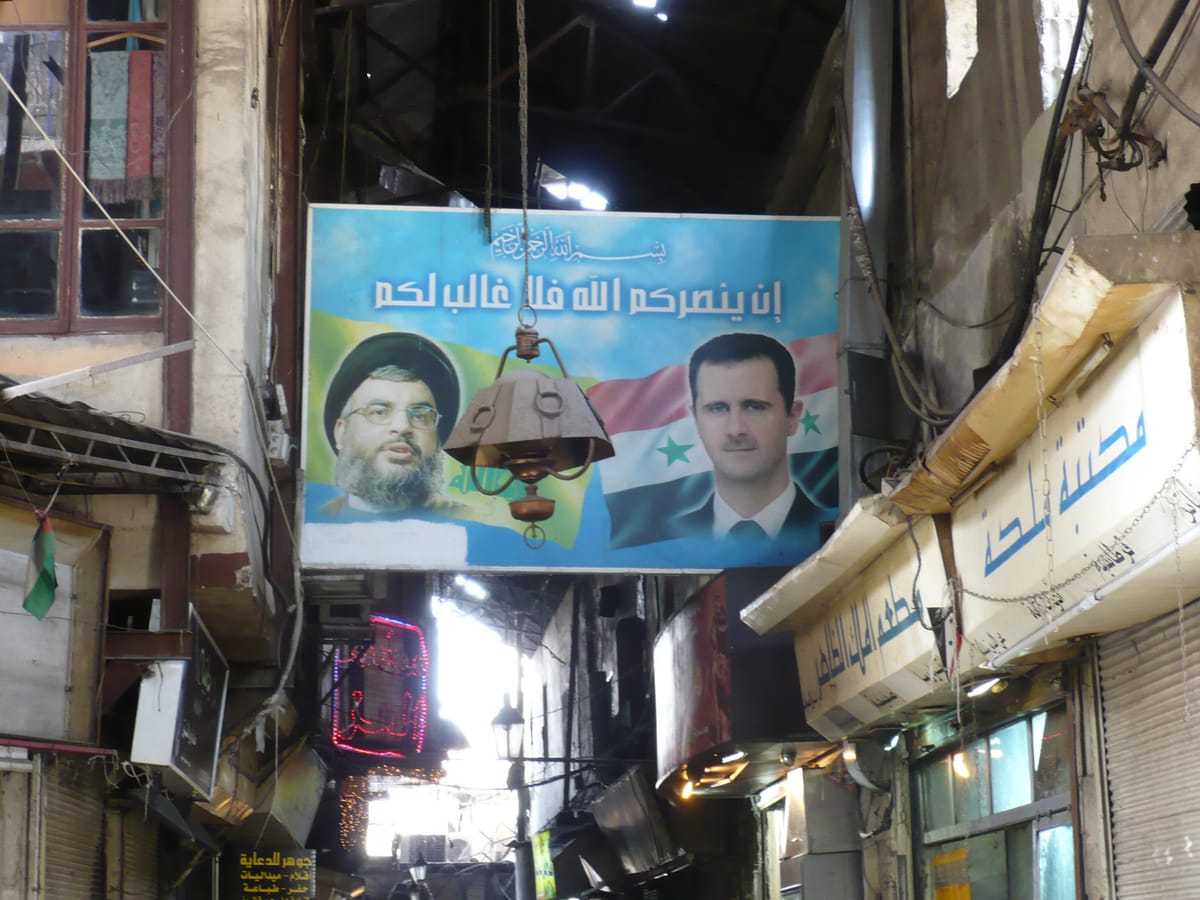
A month or so after that, another expert, this one on Syria – again, someone with vast knowledge of the country – insisted that growing protests against the dictatorship of Bashar al-Assad would come to nothing. “And the chance of a civil war in Syria is zero.”
You can go back to other major events in the past, as well. Take the revolutions in central and eastern Europe in 1989, for example. Almost no expert saw them coming.
The point here is not to embarrass anyone or disparage their expertise. They are all still super-knowledgeable people, and they remain respected analysts in their fields. I will always read and listen to what they have to say.
Still, they failed to predict some of the biggest changes in their countries of expertise. Why?
What ties all these examples together is their scale. They are significant shifts in a situation.
People who are experts in a country know the details. They know the day-to-day. They know what happens normally. Revolutions and radical change are not normal.
Authoritarian systems in particular often have a numbingly – if deceptively – predictable staleness to them. They seem ossified and almost timeless. The same faces have ruled over the place for many years, and it’s hard to even imagine anything being otherwise.
What’s more, the experts have met with some of those people, multiple times, year after year, and other experts have as well. When they compare notes, everyone analysing a country develops a similar mindset. The status quo seems unshakable. Regimes seem firm, not fragile.
And then, they fall apart.
What some experts may be guilty of is not diversifying their sources beyond the same familiar faces. They may feel it doesn’t make sense to talk with non-governmental organisations (where they exist), dissidents, and exiles, because they’re not in power. They are marginal at best, so why bother?
And then, when those marginal voices suddenly get louder, and revolution is in the air, the experts are empty handed. They haven’t developed a broad enough network of contacts to understand what these groups and individuals are about and how strongly they resonate among the public.
Of course, sometimes it’s understandable. Being seen talking to people a dictatorship considers opposition is a good way to have your visa rejected. Or it could get those people in serious trouble.
Still, what you're left with is international experts who understand an authoritarian regime in great detail but maybe not the wider society, from which regime change may one day arise.
=======
Quick Links
Frozen Funds: The EU has agreed to indefinitely freeze Russian central bank assets held in Europe. They want to use the funds for loans to Ukraine.
Some worry this might set a precedent. I hope it does. Every regime that invades another country, committing countless mass atrocities, should have their foreign assets taken and handed to their victims. This might get other would-be invaders to think twice.
Yes, there are concerns about rule of law, but those are on both sides of the issue. Should the law protect the assets of a few rich and powerful mass murderers, or should the law protect the rights and lives of their millions of innocent victims who are being bombed, tortured, raped, and immiserated?
Former Friends: The new US national security strategy is yet another Trump regime attack on Europe. It essentially says Europe’s core problem is, as Peter Beaumont puts it, “not enough racism”.
Cas Mudde sums it up like this: “...the current US government believes that its national security is best served by the destruction of liberal democracy in Europe. In other words, the US is not (just) an unwilling ally, it is a willing adversary. Time to act accordingly.”
And, yes, “the US commitment to NATO is no longer guaranteed”.
Falling for Fascism: A number of countries are aiming to “rebalance” – read “weaken” – the European Convention on Human Rights (ECHR). UK Prime Minister Keir Starmer has called on European leaders to curb the ECHR, especially in relation to migrants and asylum seekers, to halt rise of far right.
They seek, for example, “to narrow the meaning of ‘inhuman and degrading’ treatment so that some inhuman and degrading treatment is permissible”.
Apart from the moral repugnance of this idea, there’s also its political impracticality: it won’t work. In fact, adopting far-right policies to stop the far right gaining influence has to be the stupidest idea in European politics today.
You cannot “out far right” the far right. If you adopt one policy they want, they will always have more (and darker) policies to push. So, what then? You just keep following them down the path towards more human rights abuses and eventually atrocity crimes?
Where is the leadership? Rather than copying racist, attention-seeking buffoons, how about doing what leaders should be doing and providing your own vision?